The Department of Economics is one of the oldest faculties of the college. The department is housed in the "Old Administration Block". he department also facilitates researches and has a well stocked library. The teaching in Economics is imparted at both U.G. and P.G. level i.e. B.A. Hons. and M.A. Undergraduate teaching started in 1956 with the inception of the College. The Postgraduate teaching commenced in the year 1984. The pass out students of the department have been placed in different sectors in India as well as outside India.
INFRASTRUCTURAL SUPPORT
The Department of Economics is one of the oldest faculties of the college. The department is housed in the Old Administration Block. The department also facilitates researches and has a well stocked library. The teaching in Economics is imparted at both U.G. and P.G. level i.e. B.A. Hons. and M.A. Undergraduate teaching started in 1956 with the inception of the College. The Postgraduate teaching commenced in the year 1984. The pass out students of the department have been placed in different sectors in India as well as outside India.
Departmental Strength According to the official department profile: • UG Seats: 188 • PG Seats: 127
Year of Establishment
UG - 1966
PG 1984
Name of the Programmes / Courses offered
UG, PG & Ph. D.
Names of the Interdisciplinary courses and the departments / units involved
MBA
BBA
B.Com.
LSW
Annual/ Semester/ Choice based credit system (programme wise)
UG: CBCS/Annual
PG: CBCS
Vision
To impart quality education in Economics.
To make the students creative and research oriented.
To provide a platform to the students to exhibit their talent and creativity.
Mission
To provide education not only to acquire knowledge but also to inculcate a sound philosophy for a holistic living.
To encourage self evaluation, personality development & guide the students to strive towards perfection and competence.
Department of Economics provides requisite teaching and learning environment with its focus on continuing education.
Future Plans
To conduct more number of syllabus oriented seminars for the students.
To conduct skill development programs regularly.
To train the students for job opportunities in details.
Curricular Aspects
The effective implementation of the curriculum is done in the following sequence of action plans
Faculty members are briefed on the Academic Plan of the Department.
Semester-wise preparation of the Teaching Plan.
The Principal and Head of the Department monitor the progress of the syllabus.
Exposure to student through projects.
Teaching - Learning Methods
Use of chalk-talk method.
Teaching through K-Yan Projector.
Smart Classroom
Assignments.
Seminar.
Tests.
Providing study material.
Group discussions.
Remedial classes
SWOC
Strength
Qualified, motivated and Competent Faculties with a blend of high experience and young and energetic dynamism.
Effective Teaching-Learning process.
Well equipped library with sufficient number of books.
Supporting weaker students through remedial & tutorial classes.
Weakness
The small faculty size results in an increased workload for individual faculty members. This can lead to challenges in balancing teaching, research, and administrative responsibilities.
Opportunities
The small size of the department offers opportunities for collaboration with faculty and researchers from other departments. This can facilitate interdisciplinary research, joint seminars, and the development of new programs or courses.
Challenges
Due to the small number of faculty members, there are limitations on the variety of courses that can be offered, potentially limiting students' options for specialization.
Student Support
Career Counseling
Soft-skill development
Grievance Redressal Cell
Anti Ragging Committee
Students Progression
Students of Economics Department have excelled in various competitive examinations and gained admission to prestigious institutions for M.A. and Ph.D. courses.
Additionally, the significant number of students have qualified for the National Eligibility Test (NET) and Junior Research Fellowship (JRF) examinations.
Best Practice of the departmEconomicsent of
Faculty members are also providing counseling to the students.
Career counseling.
Psychological counseling.
Academic counseling
Total Seats
UG Seats:-
188
PG Seats:-
127
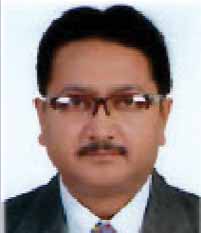
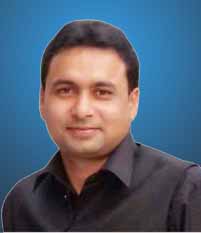
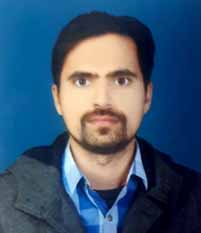
Faculty
PROF. PRITI KASHYAP
PROFESSOR
Ph.D
PROF. KUMARI VEENA
PROFESSOR
Ph.D
DR. ANIL NATH
ASSOCIATE PROFESSOR
Ph.D
DR. ABHISHEK DUTTA
SR. ASSISTANT PROFESSOR
M.A., NET
DR. VIKASH KUMAR
SR. ASSISTANT PROFESSOR
M.A., NET
DR. PRERNA PUSHP
ASSISTANT PROFESSOR
Ph.D
DR. NIHARIKA KUMARI
ASSISTANT PROFESSOR
Ph.D
DR. MRINALINI
ASSISTANT PROFESSOR
Ph.D
Eligibility
The Department of Economics at Anugrah Narayan College offers both undergraduate and postgraduate programmes in Economics.
As a constituent unit of Patliputra University, admissions to the first semester of all regular UG and PG programmes are conducted online through the university's centralized admission process, with selection based primarily on academic merit.
Undergraduate Programme
B.A. Economics (Major/Honours)
Eligibility:
Passed Intermediate (10+2) or equivalent examination from a recognized board.
Students from any recognized stream who satisfy the university admission requirements may apply.
Admission is granted on the basis of marks obtained in the qualifying examination through the Patliputra University online admission process.
Postgraduate Programme
M.A. Economics
Eligibility:
Bachelor's degree (B.A. or equivalent) from a recognized university.
Candidates with Economics as a major/honours subject at the undergraduate level are generally preferred for specialized postgraduate study.
Admission is based on merit determined from graduation marks through the university admission process.
Programme Duration (NEP 2020)
Programme
Duration
B.A. Economics
4 Years (8 Semesters)
M.A. Economics
2 Years (4 Semesters)
Admission Process
Online application through the Patliputra University admission portal.
Submission of academic records and required documents.
Publication of merit lists based on qualifying examination marks.
Document verification and fee payment.
Confirmation of admission by the college.
Important Note
Based on the admission framework followed by Patliputra University and A.N. College:
UG admissions are generally based on marks obtained in the 10+2 examination.
PG admissions are generally based on marks obtained in the bachelor's degree examination.
No separate entrance examination is ordinarily required for traditional Economics programmes.
Thus, for admission to B.A. Economics, a candidate must have passed 10+2, while for M.A. Economics, a candidate must possess a Bachelor's degree from a recognized university, with admission being merit-based through the online admission process of Patliputra University.